
Last verified: April 2026
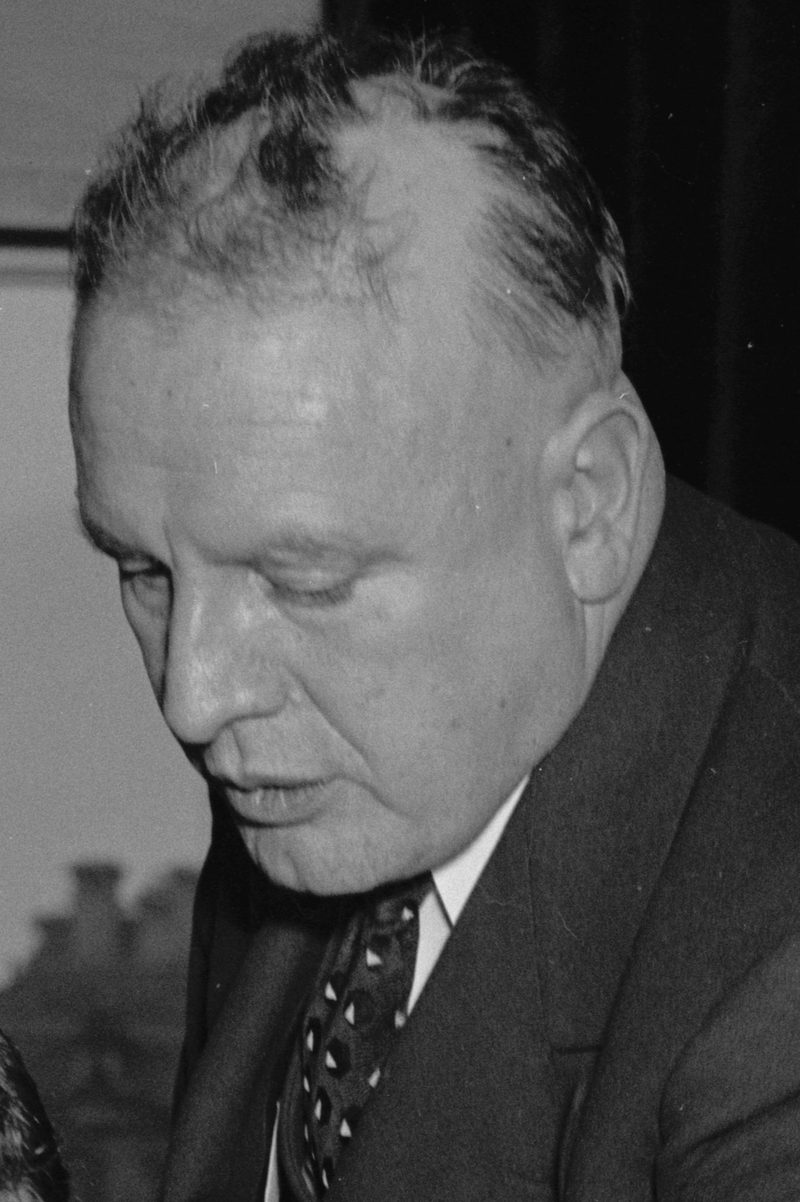
Harry J. Anslinger and the Federal Bureau of Narcotics
Harry J. Anslinger headed the Federal Bureau of Narcotics from 1930 to 1962. He was the principal architect of American cannabis prohibition and ran the propaganda campaign that culminated in the Marihuana Tax Act of 1937 — the federal statute that effectively criminalized cannabis nationwide.
The "Gore File"
Anslinger compiled what he called the "Gore File" — a lurid case-summary collection of cannabis-related crimes and incidents that he distributed to journalists, magazine editors, and members of Congress. The Gore File was a propaganda instrument designed to portray cannabis users as violent, racially-suspect, and dangerous to "white" society.
The Gore File explicitly leaned on Louisiana cases — several New Orleans-area arrests of Black and Latino men were used as exhibit material. The Louisiana cases gave the Gore File its racial-othering thread: "Mexicans, Negroes, and entertainers" became Anslinger's preferred phrase for cannabis users in his congressional testimony.
Why Louisiana Cases?
New Orleans's cannabis import volume and the Black-musician-cannabis cultural visibility made Louisiana cases especially useful for Anslinger's racialized framing:
- Black-and-Creole jazz musicians' open cannabis use was visible in the city's commercial-leisure economy.
- Mexican-import cannabis distribution networks were active in the Gulf-port city.
- Immigration-and-race anxieties about New Orleans's Black, Mexican, Cuban, and Caribbean communities aligned with Anslinger's preferred propaganda framing.
- Local Louisiana law enforcement was willing to amplify cases through Anslinger's network in exchange for federal attention.
The Specific Cases
Anslinger's Gore File and his congressional testimony for the 1937 Marijuana Tax Act referenced multiple New Orleans-area cases. Specific case details vary in the historical record (Anslinger's office was loose with documentary verification), but the racialized pattern is clear:
- Cases of violent crime committed by Black or Latino defendants who happened to be cannabis users were attributed to cannabis as the cause.
- The actual evidence linking cannabis to the underlying violence was thin or absent.
- The narrative was constructed for propaganda purposes rather than scientific or law-enforcement accuracy.
The Marihuana Tax Act of 1937
Anslinger's campaign produced the Marihuana Tax Act of 1937 — federal legislation that imposed a prohibitive tax on cannabis transactions, effectively criminalizing the substance nationwide. The Tax Act was passed despite opposition from the American Medical Association, which testified that cannabis had legitimate medical uses and that the prohibition would harm patients.
The Racialized Public Discourse
Anslinger's propaganda approach combined Gore-File case material with broader racial-othering rhetoric:
- Congressional testimony emphasizing "Mexican" and "Negro" cannabis users.
- Distribution of articles to magazines and newspapers under his name and through allied journalists.
- Coordination with the 1936 propaganda film Reefer Madness and the broader cinema-and-press hysteria of the late 1930s.
- The deliberate choice of "marijuana" (a Mexican-origin term) over "cannabis" (the medical/scientific term) to emphasize the substance's foreign-other character.
The Pursuit of Louis Armstrong
Anslinger pursued Louis Armstrong intermittently across decades, treating him as a high-profile target during the Marijuana Tax Act campaign and afterward. Armstrong was variously surveilled, harassed, and threatened with prosecution; his international fame and cultural authority generally protected him from major federal charges. See Armstrong & Muggles.
Anslinger and the Jazz Musicians
Anslinger's pursuit was not limited to Armstrong. Other Black jazz musicians who attracted FBN attention included Cab Calloway, Thelonious Monk, Charlie Parker, and Billie Holiday. Holiday's pursuit by Anslinger's bureau is now well-documented; she was arrested multiple times and harassed in the months before her death in 1959.
The Legacy of Anslinger's Louisiana Framing
The legacy of Anslinger's racialized framing is still present in U.S. cannabis politics; reckoning with it is part of why social equity is a core legal-cannabis principle today. Modern adult-use legalization in California (Prop 64), New York (MRTA), New Jersey, Illinois, and elsewhere has explicitly addressed the racial-justice dimension that Anslinger's 1937-era propaganda created.
The Mexican Source
Mexican prohibitionist publications between 1900 and 1920 had established a vocabulary about cannabis ("la mariguana") describing it as causing madness, violence, and "racial regression." That framing migrated north into U.S. discourse with Mexican migration during and after the Mexican Revolution (1910–1920). Anslinger's Louisiana-case framing built on this earlier Mexican prohibitionist literature. See MexicoCannabis.org for the broader history.
The Modern Reckoning
Modern cannabis-policy reform increasingly treats Anslinger's racialized propaganda as a cultural-historical wrong to address through:
- Expungement of prior cannabis convictions (Louisiana's expungement framework is at LRS §44:9).
- Social-equity licensing in legal-cannabis states.
- Public-health rather than criminal-justice framing of cannabis policy.
- Direct acknowledgment of the racialized origin of prohibition in modern legalization preambles.
Further Reading
- Johann Hari, Chasing the Scream (2015) — modern history of Anslinger and the drug war.
- Isaac Campos, Home Grown: Marijuana and the Origins of Mexico's War on Drugs (2012) — Mexican prohibitionist origins.
- Modern academic scholarship on the racial dynamics of 1930s drug policy.
For in-depth cannabis education, dosing guides, safety information, and research summaries, visit our partner site TryCannabis.org
Related on this site: Cajun & Creole Cannabis Attitudes, Jazz & Cannabis Origins in New Orleans, Storyville.