Last verified: April 2026
Why Cruise Ports Compound Cannabis Risk
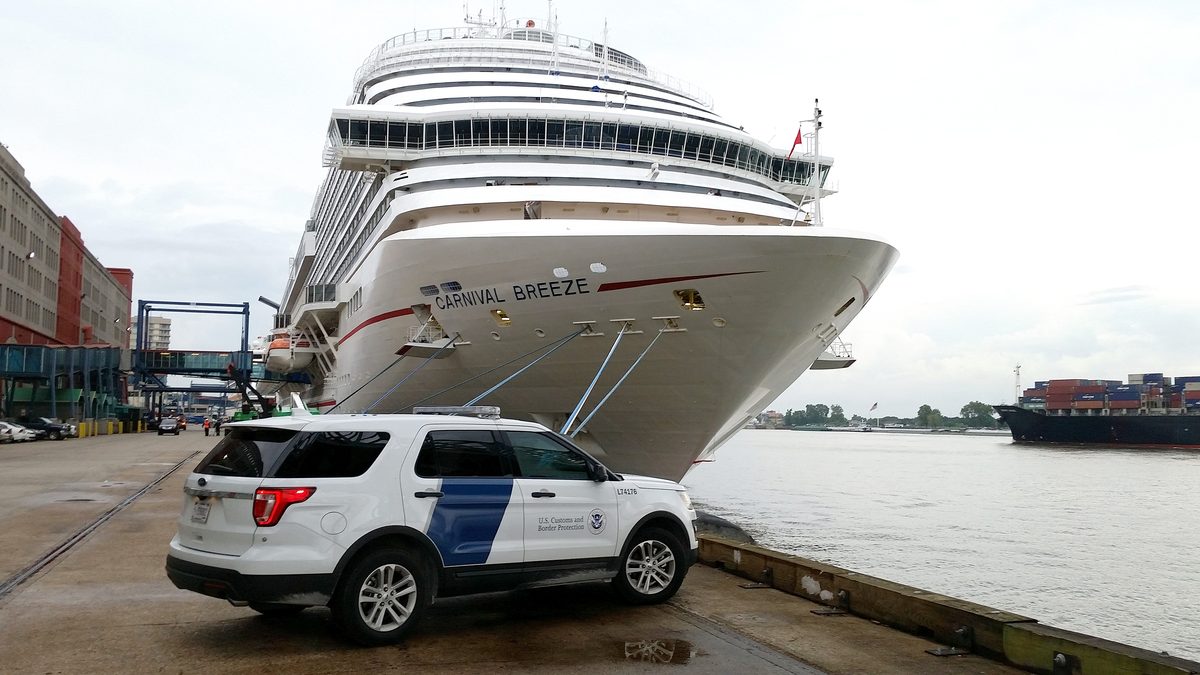
The Port of New Orleans is one of the busiest U.S. cruise embarkation points, with Carnival and Royal Caribbean sailings to the Caribbean and Mexico. Cruise lines operate under federal maritime jurisdiction and have zero-tolerance cannabis policies — including for medical cardholders from any state. Bringing cannabis on board is grounds for:
- Denial of boarding.
- Removal at the next port.
- A passenger record flag.
- Possible federal prosecution.
- Potential CBP inadmissibility issues for non-citizens (including green-card holders).
- Forfeiture of all paid cruise costs.
Major cruise lines (Carnival, Royal Caribbean, Norwegian, Disney, MSC, Princess) have zero-tolerance drug policies that explicitly exclude medical cannabis regardless of state license. The cruise contract overrides state-medical protections. Cannabis on board, even from a Louisiana pharmacy, is grounds for eviction without refund.
The Three Layers of Cruise-Port Cannabis Risk
1. The Departure-Port Bag Search
Cruise embarkation involves bag screening that varies by cruise line but generally includes:
- X-ray scanning of all luggage.
- Drug-detection dog sweeps at peak embarkation times.
- CBP and Coast Guard supplemental screening for international itineraries.
- Cruise-line security review of any flagged items.
Cannabis found at embarkation typically results in: confiscation, written incident notation, denial of boarding (no refund), and potential federal referral.
2. Onboard Federal Maritime Jurisdiction
Once a cruise ship is in U.S. waters or on the high seas, federal maritime law applies — not Louisiana state law and not state medical-cannabis law. Cannabis possession on board is a federal offense regardless of the passenger's state-license status. Cruise-line security has the authority to:
- Conduct cabin searches with reasonable suspicion.
- Confiscate any controlled substance.
- Confine the passenger pending the next port.
- Remove the passenger at the next port without refund.
- Refer to federal law enforcement for prosecution.
3. The Return-Port CBP Inspection
Cruises returning from international destinations (Caribbean, Mexico) pass through CBP at the Port of New Orleans on disembarkation. CBP inspections include:
- Customs declaration review.
- Bag screening.
- Drug-detection dog sweeps.
- Targeted secondary inspection for flagged passengers.
Cannabis found by CBP at return — even from a "legal" Caribbean or Mexican destination — is a federal offense under the Controlled Substances Act with potential prosecution and inadmissibility consequences.
Cruise Lines and Their Drug Policies
- Carnival — Zero tolerance. Documented disembarkations of guests for cannabis.
- Royal Caribbean — Zero tolerance. Eviction at next port without refund.
- Norwegian — Zero tolerance.
- Disney — Strict family-brand policy with aggressive enforcement.
- MSC, Princess, Holland America, Celebrity — All maintain strict drug policies in passenger contracts.
The "I Bought It at the Pharmacy" Mistake
A common misconception: passengers think a Louisiana pharmacy purchase is safe to bring on a cruise. It is not. Pharmacy purchase makes the product legal in Louisiana but does not change:
- Federal maritime law on board.
- Cruise-line zero-tolerance contracts.
- CBP federal-import status on return.
- The destination port's local drug laws.
What About CBD Products?
Even non-psychoactive hemp/CBD products are problematic on cruises:
- Cruise lines often treat CBD as cannabis-equivalent in their drug policies.
- CBD products with detectable THC trigger drug-detection dogs.
- Many Caribbean and Mexican destinations have local CBD restrictions.
- CBP applies the U.S. federal 0.3% THC threshold to returning hemp; products above are seized.
Practical Takeaways
- Don't bring cannabis or hemp/CBD products on a Caribbean cruise from New Orleans.
- Don't buy cannabis at Caribbean or Mexican ports for return — CBP inspection compounds the federal exposure.
- Don't pack vape pens with THC content — TSA-style screening at embarkation will flag.
- If you depend on cannabis for medical reasons, consider whether a cruise is the right travel option for you, and consult an employment attorney about the alternative-medication path before sailing.
- If you're a non-citizen or green-card holder, cannabis incidents at U.S. ports of entry can produce inadmissibility findings; CBP's discretion under INA §212(a)(2)(A)(i)(II) is broad.
Other Louisiana Cruise Implications
The Port of New Orleans isn't the only Louisiana cruise port; smaller cruise calls happen at:
- Other minor commercial ports.
- Mississippi Gulf Coast ports — many embark from the Louisiana side.
- River-cruise embarkation (Mississippi, American Queen-style) — also subject to federal maritime jurisdiction.
For in-depth cannabis education, dosing guides, safety information, and research summaries, visit our partner site TryCannabis.org
Related on this site: Louisiana Border Weed & Cross-Bor..., Louisiana Cannabis Events & 4/20..., Louisiana Tourist Cannabis & Publ....