Last verified: April 2026
The Most Famous and Articulate Cannabis Advocate of the 20th Century
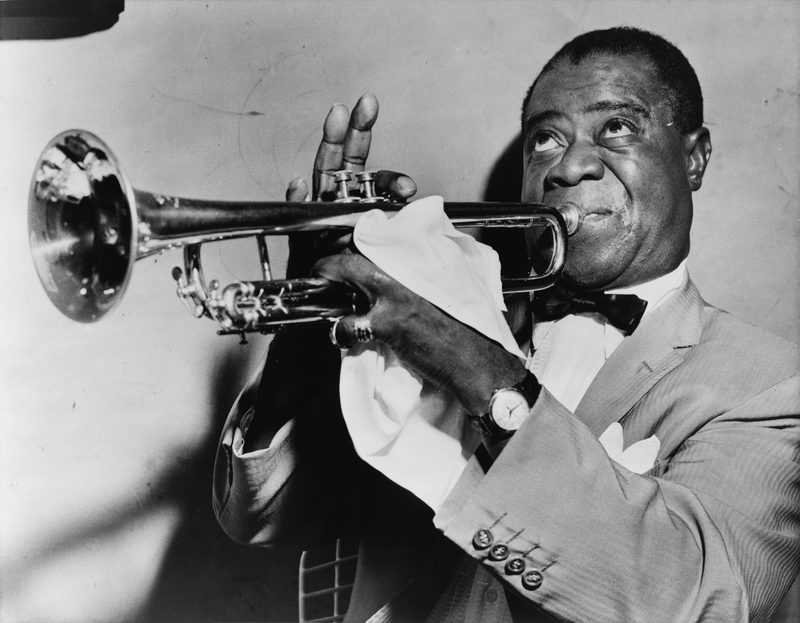
Louis Armstrong — born in New Orleans in 1901, raised in Storyville-adjacent poverty — was the most famous and most articulate cannabis advocate of the 20th century. Armstrong consumed cannabis daily for most of his adult life and wrote about it openly and warmly in his private letters: he called it "the gage" and credited it with helping him manage the emotional and physical demands of touring.
The Recording — December 7, 1928
Armstrong recorded an instrumental titled "Muggles" with his Hot Five on December 7, 1928 in Chicago. The title is jazz slang for joints, the recording is one of the great early Armstrong sides, and the cannabis cultural reference was unmistakable to listeners who knew the slang.
The recording session was at OKeh Records' Chicago studio. The Hot Five lineup at the time included Armstrong on cornet, Earl Hines on piano, Don Redman on alto saxophone, Fred Robinson on trombone, and Zutty Singleton on drums. The recording is now in the National Recording Registry of the Library of Congress.
The 1930 Culver City Arrest
On November 14, 1930, while playing at the Cotton Club in Culver City, California, Armstrong and drummer Vic Berton were arrested in a parking lot for possession of cannabis. Armstrong served a brief jail term and a suspended sentence. The arrest is one of the earliest celebrity cannabis arrests in American history and contributed to the emerging public association — soon to be ruthlessly exploited by federal narcotics propagandists — between Black jazz musicians and "the Marijuana Menace."
Armstrong's Daily Cannabis Use
Armstrong's private writings and letters document daily cannabis use across decades:
- He referred to cannabis as "the gage."
- He credited it with helping him manage the physical demands of constant touring.
- He distinguished cannabis from harder drugs (cocaine, heroin) and was a vocal opponent of the latter.
- He sometimes wrote his autobiographical thoughts in his hotel-room cannabis-induced reflective state.
Armstrong's posthumously-published Satchmo: My Life in New Orleans (1954) and various letter collections preserve his open relationship with cannabis.
The Cultural Significance
- Armstrong was one of the most internationally famous Americans of the 20th century.
- His cannabis use was an open secret in jazz circles for decades before becoming public.
- The contrast between his beloved-cultural-icon status and the demonized image of cannabis users in the 1930s–1950s was a cognitive dissonance the federal narcotics establishment never fully resolved.
- Armstrong's 1957 Civil Rights stance (the "Little Rock incident" in which he publicly criticized President Eisenhower for inaction) added political weight to his cultural authority.
"Muggles" as Cultural Document
The 1928 "Muggles" recording is now treated as a cultural document of:
- The Black-musician origin of much American cannabis culture.
- The pre-prohibition acceptability of cannabis cultural references in American popular music.
- The bridge between New Orleans Storyville-era cannabis culture and the Chicago-Harlem-Los Angeles jazz diaspora.
Armstrong's New Orleans Roots
Armstrong was born in 1901 in a Storyville-adjacent neighborhood and grew up in deep poverty. He learned cornet at the Colored Waif's Home for Boys (a juvenile-detention facility) under the guidance of Peter Davis. By his late teens he was playing in Storyville-era venues alongside Joe "King" Oliver. His move to Chicago in 1922 to join Oliver's Creole Jazz Band marked the transition from local New Orleans star to international jazz icon.
The Mezzrow Connection
Milton "Mezz" Mezzrow — a Chicago-born clarinetist who lived inside the New Orleans–exported jazz scene of New York's Harlem — became, by his own boast, the most reliable cannabis dealer in jazz. Mezzrow's 1946 memoir Really the Blues documents his cannabis distribution network among Black musicians, including Armstrong. "Mezz" briefly became 1930s jazz slang for high-quality cannabis itself.
The Anslinger Pursuit
Federal Bureau of Narcotics chief Harry J. Anslinger pursued Armstrong intermittently across decades, treating him as a high-profile target during the Marijuana Tax Act campaign and afterward. Armstrong was variously surveilled, harassed, and threatened with prosecution; his international fame and cultural authority generally protected him from major federal charges. See Anslinger page.
Armstrong's Cannabis Legacy
Armstrong's openness about his cannabis use, combined with his cultural authority, made him a foundational figure in the eventual normalization of cannabis discourse in American culture. He pre-dated the 1960s counter-culture cannabis advocates by half a century, and his Black-musician advocacy meant that cannabis culture was never just a white-college-student phenomenon in American history.
Visiting Armstrong's New Orleans
- Louis Armstrong Park — Tremé.
- The Old Mint / New Orleans Jazz Museum — French Market District.
- Preservation Hall — French Quarter; the music continues.
- The Armstrong house at 1530 St. Philip Street — historical marker.
For in-depth cannabis education, dosing guides, safety information, and research summaries, visit our partner site TryCannabis.org
Related on this site: Cajun & Creole Cannabis Attitudes, Jazz & Cannabis Origins in New Orleans, Storyville.