Last verified: April 2026
The Sidney Story Ordinance — 1897
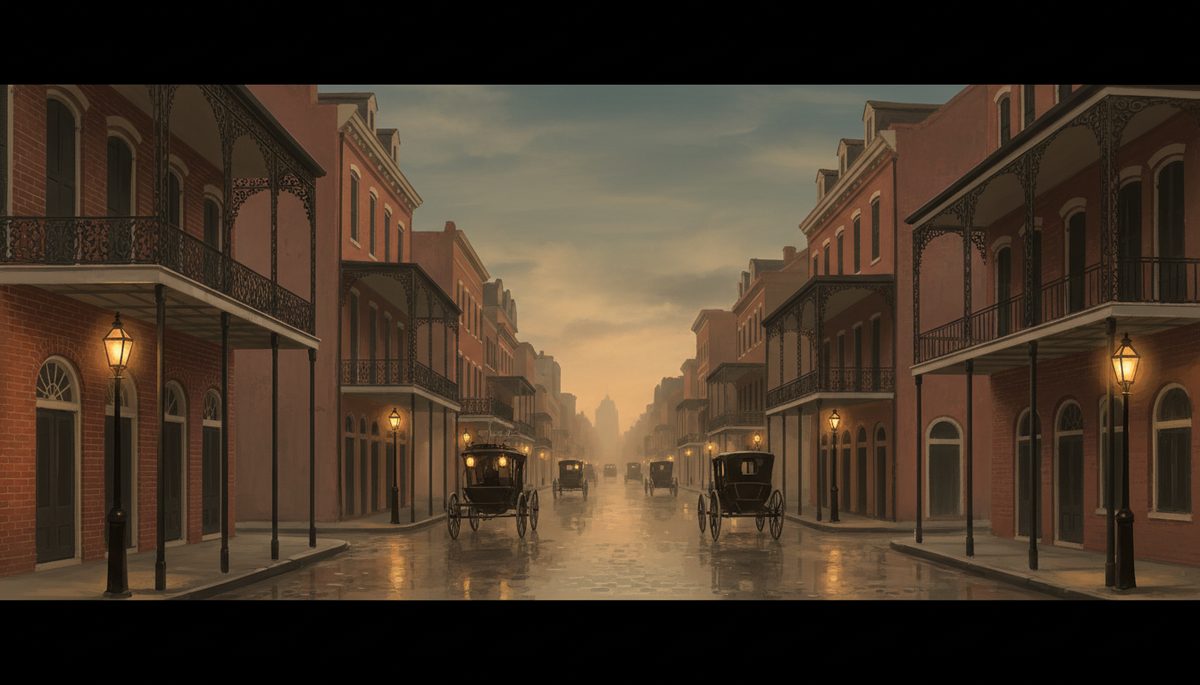
Storyville was created by a New Orleans City Council ordinance in 1897, proposed by Councilman Sidney Story as a containment-zone for prostitution. The ordinance designated a roughly 16-block area — bounded today by Iberville, Basin, St. Louis, and Robertson Streets, immediately adjacent to the French Quarter — as the only legal area for licensed prostitution in the city. The district existed from 1897 to its closure by U.S. Navy order in 1917.
What Storyville Contained
- Brothels — from the elite (Lulu White's Mahogany Hall) to the shanty cribs.
- Saloons.
- Gambling rooms and "concert saloons".
- Music venues — particularly piano bars and small ensembles.
- "Blue Books" — printed directories of brothels and prostitutes.
- Regulated commercial sex work with weekly health inspection.
Cannabis in Storyville
Cannabis was part of the Storyville cultural fabric:
- Rolling-paper sales at corner pharmacies were unregulated.
- Wholesale cannabis was openly sold from Caribbean and Mexican import sources.
- Saloon and brothel patrons used cannabis alongside alcohol.
- Musicians on long shift work used cannabis to manage performance demands.
- The slang "muggles," "gage," "tea," and "reefer" emerged from the Storyville-era musician community.
The Musicians of Storyville
The musicians who would invent and export jazz worked in Storyville and adjacent venues:
- Buddy Bolden (1877–1931) — often credited as a foundational jazz figure.
- Jelly Roll Morton (1890–1941) — pianist and composer; his "Doctor Jazz" lyrics openly reference Storyville.
- King Oliver (1881–1938) — cornetist; mentor to Louis Armstrong.
- Sidney Bechet (1897–1959) — clarinetist and soprano saxophonist.
- Louis Armstrong (1901–1971) — born Storyville-adjacent; performed in post-Storyville French Quarter venues. See Armstrong page.
- Tony Jackson, Joe "King" Oliver, Bunk Johnson, Kid Ory, and many others.
The Closure — 1917
The U.S. Navy, alarmed by sexually-transmitted-infection rates among sailors at the New Orleans port during World War I, demanded closure of Storyville. The City Council passed the closure ordinance in October 1917 over the objections of New Orleans's establishment political class. The district shut down by the end of November 1917.
The Musical Diaspora After Closure
The closure pushed Storyville-trained musicians outward:
- To Chicago — King Oliver, Louis Armstrong, Jelly Roll Morton, Earl Hines.
- To New York — Sidney Bechet, James Reese Europe, eventually the Harlem Renaissance scene.
- To Los Angeles — Kid Ory, Jelly Roll Morton.
- To Europe — Sidney Bechet, James Reese Europe (with the 369th Infantry Regiment Hellfighters band).
The cannabis-and-music culture traveled with them. Chicago's "Mezz" Mezzrow's distribution network in 1930s Harlem was a direct continuation.
What Endures
- The geographic footprint is now the Iberville/Basin/St. Louis/Robertson area, with the Iberville Public Housing development covering much of the old Storyville core.
- Tremé, the Black neighborhood adjacent to Storyville, retains cultural-historical importance and is featured in the HBO series of the same name.
- The slang vocabulary from Storyville-era musicians ("muggles," "gage," "tea," "reefer") became permanent American cannabis vocabulary.
- The Black-musician cannabis-advocacy lineage from Storyville through Armstrong to today's New Orleans music scene remains a cultural through-line.
Why Storyville Matters for Cannabis History
Storyville is one of the most important physical sites in American cannabis cultural history. Three reasons:
- It was the first formally-bounded American urban district where cannabis was openly part of the commercial-leisure economy.
- It produced the slang vocabulary and musical culture that carried cannabis into the broader American consciousness.
- It demonstrated that cannabis could be culturally absorbed by an American urban scene — three decades before federal prohibition tried to erase that absorption.
Visiting the Storyville Footprint Today
- Louis Armstrong Park — adjacent to the old Storyville footprint; commemorative.
- The New Orleans Jazz Museum at the Old Mint — exhibitions on Storyville and the early jazz era.
- The Backstreet Cultural Museum in Tremé — Black-cultural-heritage focus.
- Tremé walking tours — multiple operators.
Further Reading
- Al Rose, Storyville, New Orleans: Being an Authentic, Illustrated Account of the Notorious Red-Light District (1974).
- Jelly Roll Morton's recorded interviews with Alan Lomax (Library of Congress, 1938).
- HBO's Tremé (2010–2013) — modern dramatization with deep historical roots.
For in-depth cannabis education, dosing guides, safety information, and research summaries, visit our partner site TryCannabis.org
Related on this site: Anslinger's "Gore File" & the Louisia..., Cajun & Creole Cannabis Attitudes, Jazz & Cannabis Origins in New Orleans.